
The Legacy of Nathuram Godse: History, Ideology, and Impact
Delve into the controversial legacy of Nathuram Godse and explore his actions and ideology. Was he a patriot driven by his beliefs, or a misguided extremist? This blog uncovers hidden perspectives, historical narratives, and the impact of his actions on India's history. Keep reading to learn the hidden story of this controversial figure.
2/1/20255 min read
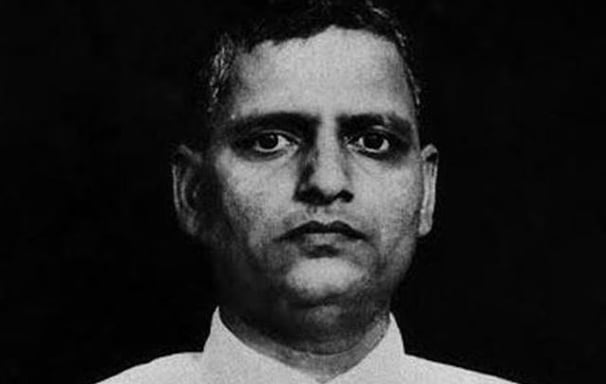
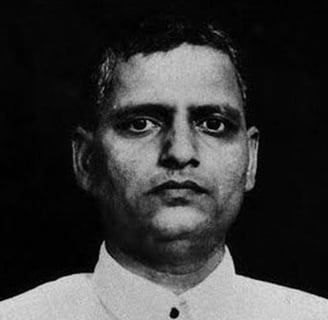
We have learned about Gandhi's assassination by Nathuram Godse in textbooks and are familiar with the narrative they present. But have we ever looked at it from Godse's perspective? This blog explores his side of the story, shedding light on his thoughts and reasons.
Nathuram Godse's Early Life: Childhood, Influences, and Background
Nathuram Godse was born into a Maharashtrian Brahmin family and received his early education in Baramati before moving to Pune for further studies at an English-language school. However, he dropped out of high school and became involved in nationalist activities. During his school years, he had great respect for Mahatma Gandhi and even participated in the Civil Disobedience Movement in 1930. Over time, he was influenced by the nationalist ideals of Vinayak Damodar Savarkar and joined the Rashtriya Swayamsevak Sangh (RSS) and Hindu Mahasabha. In 1942, he founded his own organization, Hindu Rashtra Dal, to further promote his ideology. Later, he started a newspaper called Agranee, along with Narayan Apte, where he frequently wrote articles to express his views. He also translated Ganesh Damodar Savarkar’s books into English to spread nationalist ideas.
The Assassination of Mahatma Gandhi
There were several attempts to assassinate Mahatma Gandhi in both South Africa and India. Did Nathuram Godse succeed in his first attempt? No. He tried to attack Gandhi with a dagger in May 1944 and September 1944, but each time, Gandhi was saved. However, in his final attempt, Godse shot Gandhi three times with a revolver as he was walking to a prayer meeting in New Delhi. Gandhi succumbed to his injuries shortly after the attack.
Why I Killed Gandhi: Nathuram Godse’s Reasons in His Own Words
Godse’s Legacy: Impact, Justifications, and Historical Perspective
Nathuram Godse's actions were driven by his strong beliefs about Gandhi’s influence on Indian politics and the consequences of partition. He saw Gandhi’s decisions as harmful to the nation and felt that eliminating him was the only way to change the course of Indian politics.
Regardless of opinions on his actions, Godse’s justification remains a subject of intense debate. His words reflect his firm conviction, and he believed that history would judge him fairly in the future. His story continues to spark discussions about freedom, leadership, and the cost of political decisions.
Thank you for reading!
We hope this exploration about the legacy of Nathuram Godse has provided valuable insights into this crucial chapter of India's history. Stay tuned for more articles on India’s hidden history.
On January 13, 1948, I learned that Mahatma Gandhi had decided to go on a fast unto death, saying it was for Hindu-Muslim unity. However, I and many others believed that the real reason was to pressure the government into paying Rs. 55 crores to Pakistan, a payment the government had previously refused. But due to Gandhi’s fast, the government changed its decision. To me, it was clear that public opinion did not matter as much as Gandhi’s influence, which seemed to favor Pakistan.
In 1946, large-scale violence against Hindus took place in Noakhali under the government led by Suhrawardy. This filled us with anger and pain. However, we were shocked and deeply hurt when Mahatma Gandhi defended Suhrawardy and even called him a martyr during his prayer meetings.
Gandhi's influence in Congress first grew and then became supreme. His efforts to awaken the public were intense, supported by the slogans of truth and non-violence, which he openly promoted across the country. However, I could never believe that using weapons to defend against an attacker was wrong.
Ram killed Ravan in a fierce battle, and Krishna defeated Kansa to end his cruelty. However, Gandhi called Shivaji, Rana Pratap, and Guru Gobind Singh ‘misguided patriots,’ which showed his arrogance. Although he preached truth and non-violence, his actions led to great suffering in the country. In contrast, Shivaji, Rana Pratap, and Guru Gobind Singh will always be remembered and respected by the people.
Gandhi was eager to gain the trust of Muslims and kept making unrealistic promises. He supported the Khilafat Movement, hoping that Indian Muslims would support his Non-Cooperation Movement against the British. However, this unity did not last and led to more communal tensions. Soon after, the Moplah Rebellion proved that Muslims did not share the idea of national unity. This resulted in widespread violence and the killing of many Hindus.
For 32 years, Gandhi's actions, especially his last fast in support of Muslims, led me to the final decision that his influence had to end immediately. He believed that only he could decide what was right or wrong, and Congress either had to follow his wishes blindly or move forward without him.
Gandhi was the main strategist behind the Civil Disobedience Movement, and whether it succeeded or failed, he never questioned his own decisions. His rigid beliefs, strict lifestyle, and constant hard work made him a powerful and influential figure. However, in this position of absolute authority, he made many mistakes, yet no one could challenge him.
Gandhi even supported the separation of Sindh from the Bombay Presidency and threw the Hindus of Sindh to the communal wolves. Numerous riots took place in Karachi, Sukkur, Shikarpur and other places in which the Hindus were the only sufferers.
From August 1946, Muslim League's private armies started attacking Hindus, causing widespread violence from Bengal to Karachi, with some reactions in Deccan. The Interim Government, formed in September, was disrupted by Muslim League members, who acted disloyally. However, instead of opposing them, Gandhi’s support for them only grew stronger.
The Congress, which claimed to stand for nationalism and socialism, secretly accepted the creation of Pakistan and completely gave in to Jinnah's demands. As a result, India was divided, and one-third of its land became a separate country. This was the outcome of Gandhi’s 30 years of unquestioned leadership, which the Congress party still calls ‘freedom.’
One of Gandhi's conditions for ending his fast unto death was that Hindu refugees in Delhi must vacate the mosques they had taken shelter in. However, when Hindus in Pakistan faced violent attacks, he did not say a word to criticize or condemn the Pakistan government.
Gandhi is called the Father of the Nation, but if that is true, he failed in his duty by agreeing to the partition of India. The people strongly opposed the creation of Pakistan, but Gandhi ignored their wishes.
I knew that if I killed Gandhi, I would be hated by the people and my life would be ruined. However, I believed that without Gandhi, Indian politics would become stronger, more practical, and capable of defending itself. I was willing to sacrifice my future to protect the nation from Pakistan's growing influence.
I fired my shots at Gandhi because I felt his policies had caused great suffering to millions of Hindus. There was no legal way to hold him accountable, so I took action myself.
I do not ask for mercy. I shot Gandhi in broad daylight and made no attempt to escape. I did not even try to take my own life because I wanted to express my thoughts openly in court. Despite all the criticism, I still believe in the moral side of my actions. I am sure that honest historians will one day judge my actions fairly.